Airline Industry
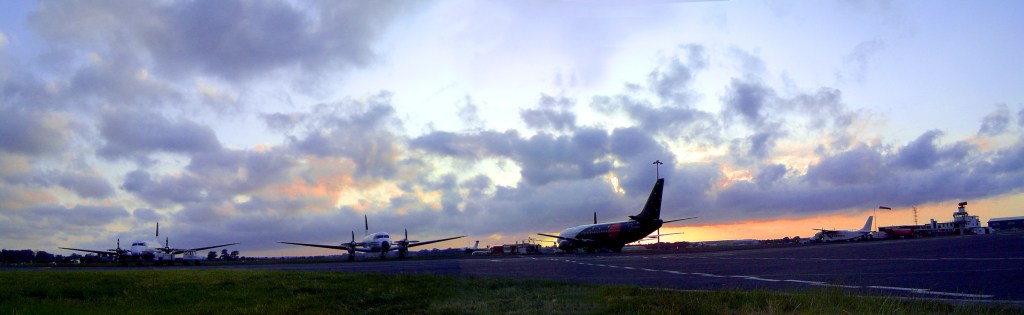

A to B: Travel / Migration
We are living in a pandemic world where travelling in flights become the past and only appear in your dreams. Say in one of such dreams you are taking a long haul flight from London to Los Angeles, which normally takes 11+ hours just on the flight if all goes well. Yes, all must go well otherwise the respective airline will be grounded, which creates a demand of close to 100% reliability and with no SLA breach.
If you consider yourself and your baggage as payload, reliability and SLA requirements to deliver yourself and your baggage from A to B is almost non-negotiable to be perfect.
Is that really easy?
NO.
There are lots of ground work before an aircraft can be made available for take off, there are lots of process to onboard a passenger and their baggage to aircraft and really complicated readiness checklist before take off and even complicated and risky maneuvering by pilot while take off.
The challenge doesn’t stop there, in flight even though most of the time the aircraft will be flying in autopilot mode it must detect any anomalies and bring it to pilot’s attention for their intervention, so the autopilot system must be absolutely perfect. This system is an outcome of hundreds of thousands of hardworking people and satisfying hundreds if not thousands of compliance requirements and continuous and regress testing to make sure there aren’t any defects.
If that’s not challenging enough, landing is probably even complicated especially coordination with the control tower and making sure all the checklist are done in the right sequence and all these are done by handful of pilots and control tower staff. This followed by arrival process, which is again process intensive but works all the time.
There are few key observations here, that airline industry have zero tolerance for mistakes, but still they have automated where their staff have to work long time yet tirelessly and with same level of attention (i.e. pilots) and still not trying to automate where their staff need to make an intelligent decisions, work effectively but most importantly meeting all compliance and regulatory obligations from various authorities.
Let’s come out of the airline industry, you would be wondering why I am talking about flying in a Cloud Blog!
Obviously no one would say that the Cloud migration is complicated when compared to sending a passenger and their baggage from A to B. But have we achieved near 100% reliability and almost certainly meeting the SLA in terms of Cloud migration?
Takeaways from airline industry
- All processes are streamlined for departure, arrival and aircraft manufacturing.
- Everyone involved are working towards one outcome, which is delivering the passenger from A to B with their baggage.
- Where automation is a must and possible then it’s automated, but where automation is too complex and more accuracy is required, the streamlined manual processes are put in place.
- Throughout the journey what works hard are computers and other equipment in both airports, aircraft itself and it’s software systems, but NOT people.
Cloud Migration
Let’s consider each passenger and their baggage as a workload that needs to be migrated to A (on-premise) to B (Cloud) with certainly reliability if not 100% and agreed timeframe (i.e. SLA).
Obviously all passengers and their baggage are almost same where as each workloads has their one unique requirements, so that creates a unique challenge to Cloud migration that the airline industry doesn’t have to handle.
But not all people can travel and before anyone can travel, each person has to go through a process to qualify for travel, same applies to workloads.
Let’s get in to each stage of the migration process.
Take Off
Workload Readiness
Before a person arrive at the departure airport, the person needs to be ready to depart with compliant baggage otherwise the person won’t be allowed.
The same applies to each workload, before each workload can be migrated, the workload needs to be ready with the right level of treatment required so the workload is Designed 4 Cloud and ready for Cloud.
Tooling and Cloud Readiness
Also on the same note, no one is allowed if departure or arrival airports are not ready or if the flight is not ready. Once the passenger is checked in, they should be able to reach the final destination without any delays.
For a successful migration of a workload to Cloud, it’s not only the workload that needs to be ready, but also the tooling required to migrate the workload, cloud environment that’s going to run the workload once migrated and the crew which is going to look after the workload in Cloud.
Migration Focus
There is one thing standing out in the airline industry is that the focus on getting the passenger and their baggage from A to B safely with minimal or no delay.
So when it comes to a workload migration to Cloud, everyone must be focused on migrating the workload on a timely and sustainable manner.
Lessons from Airline to Cloud on Take Off
The workloads that needs to be migrated, must be carefully analysed and must go through a cloud migration treatment including designing the workload for cloud before it can be considered for migration.
Here the usual challenges are with COTS and legacy workloads as they are never designed 4 cloud. My blog on enterprise-cloud-transformation-a-recipe-for-successful-strategies might help for further reading on this.
Readiness of the migration tooling and cloud environment is normally a chicken and egg problem for first few workloads as it all depends on how funding works within each organisation. It’s best to get the base level of migration tooling and foundational cloud environment before considering the first workload. Very strong Cloud strategy, Technology Leadership and Technology funding is required as until a workload is considered to be migrated as there will be no business units will be ready to fund it.
It’s really critical for first few migration to get alignment with technology and business, worse outcome could be where technology spending all technology funding on building migrating tooling and cloud environment and business spending all funding on on-premise to either remediate risks or add more services!
Now it’s good time to talk about the outcome, yes, it’s really tricky when it comes to Cloud migration but unfortunately, this one thing that needs to be aligned from CEO to any layman, that the outcome is clear. Such as migration of workload to cloud or out of data center by certain date etc.,
Autopilot
Assuming the workload is allowed to enter Cloud migration (i.e. take off), the actual migration itself is intense and time consuming operation, same as aircraft’s navigation after take off.
So this is where, there must be focus on automated processes to migrate the workload from on-premise to cloud so it can land in the new cloud environment.
The automation also must consider human intervention where it’s required to make an intelligent decision same as how autopilot system alerts the pilot with manual override.
Also the automation must have regress automated testing to make sure it’s always functional without any defects.
Here again, the focus must be given towards the workload in question, the crew who is going to manage once it’s in cloud and the target cloud environment rather than preferred technology or language. Of course there is always preference for one technology over another, but it must have the same outcome as rest of the organisation.
Lessons from Airline to Cloud on Autopilot
Develop the automation with sufficient automated testing and alerting to get human intervention where the automation cannot make an intelligent decision.
Let the Cloud provider and their technology to work hard for the automation as far as the crew who is going to manage is happy to adopt it and efficiently run with it.
Don’t let the people to build complex, heavy and unmaintainable automation also on top, with a technology that doesn’t suit for the cloud provider or the crew who is not familiar with.
Landing
The moment of truth, yes, regardless of whether it’s a passenger or a workload, this is the time for calibration if all goes well.
But it’s easily said than done. For a successful cloud migration to go-live in cloud there are lots of coordination required with various stakeholders and business just like how the pilot coordinates with the control tower.
Certain times, the control tower wouldn’t give permission for the aircraft to land and the aircraft end up rotating in air until the clearance is issued from the control tower or the fuel is about to run out, in which case it would be diverted to another nearest airport.
The same analogy applies to a workload to go-live in Cloud, if the Cloud environment is not ready then the workload has to wait until the Cloud environment is ready or the budget runs out for the particular workload.
In case if the Cloud environment is not ready before the budget run out, the workload ends up in unfortunate situation until further budget is available or may not even be attempted to be migrated as business would have moved away from the particular workload/application.
Lessons from Airline to Cloud on Landing
In traditional world, go-live can have rollback as a strategy, but as you can see there is no rollback when it comes to aircraft and this also equally applies for Cloud migration as well.
Not that the rollback is impossible, but once it’s not migrated on the scheduled day/time, it probably never going to be migrated for foreseeable future, so better be prepared for close to 100% success with a roll forward strategy, not a rollback strategy.
Disclaimer
This article was produced in my own capacity and experience so it could be beneficial for others; no association could be assumed with the organisation that I am working for now or the organisations that worked in past.
 Designed 4 Cloud Limited